
Searching the Terrebonne Parish Court Docket
No free, unified Louisiana trial-court docket site covers Terrebonne Parish. For civil and criminal indexes and dockets, the usual route is the Clerk of Court's paid Cott eSearch. Houma City Court keeps its own city records. Each justice of the peace holds the records for a ward. Start with the court named on the citation, the notice, or the most recent court paper you have. That one detail keeps a docket search from drifting into the wrong local system.
Bring the case number if you can. Without it, search on exact party or caption information. Add the approximate filing date and the court level. A name alone can pull up more than one matter. So match the division, date, and case category before trusting an entry. The online route is good for finding a lead. A current setting or an official copy still has to be confirmed. Confirm it through the office responsible for the record.
- Read the citation, notice, or prior minute entry to identify the court and any case number.
- For a 32nd JDC matter, open the clerk's Cott eSearch service and review its current account options.
- Use the case number first, then confirm the matching caption, division, and case category.
- Read the most recent docket or minute entry for the next setting, filing, or disposition.
- Call the court or clerk for a current date, a plain copy, or a certified record.
Terrebonne Parish Docket Venues
Court level drives the record path in Terrebonne Parish. The Thirty-Second Judicial District Court is the parish's general-jurisdiction court, split into Divisions A through E, and its clerk holds district civil, criminal, family, juvenile, succession, minute, appeal, and related records. Houma City Court is a separate court entirely, handling city traffic, misdemeanor, parking, ordinance, juvenile, and lower-value civil work. Ward justice courts are their own limited-civil custodians. A place name alone will not settle venue. Houma is the parish seat and its only incorporated city, but Gray, Chauvin, Dulac, and similar names mark communities, not municipal courts. The issuing agency and court caption are what count. A Houma Police ticket is not automatically a 32nd JDC criminal case, and a ward justice matter never becomes a clerk-held district record just because it arose in Terrebonne Parish.
The 32nd JDC court home identifies the district court and its divisions, which helps tell the parish court system apart from the city-court counter.
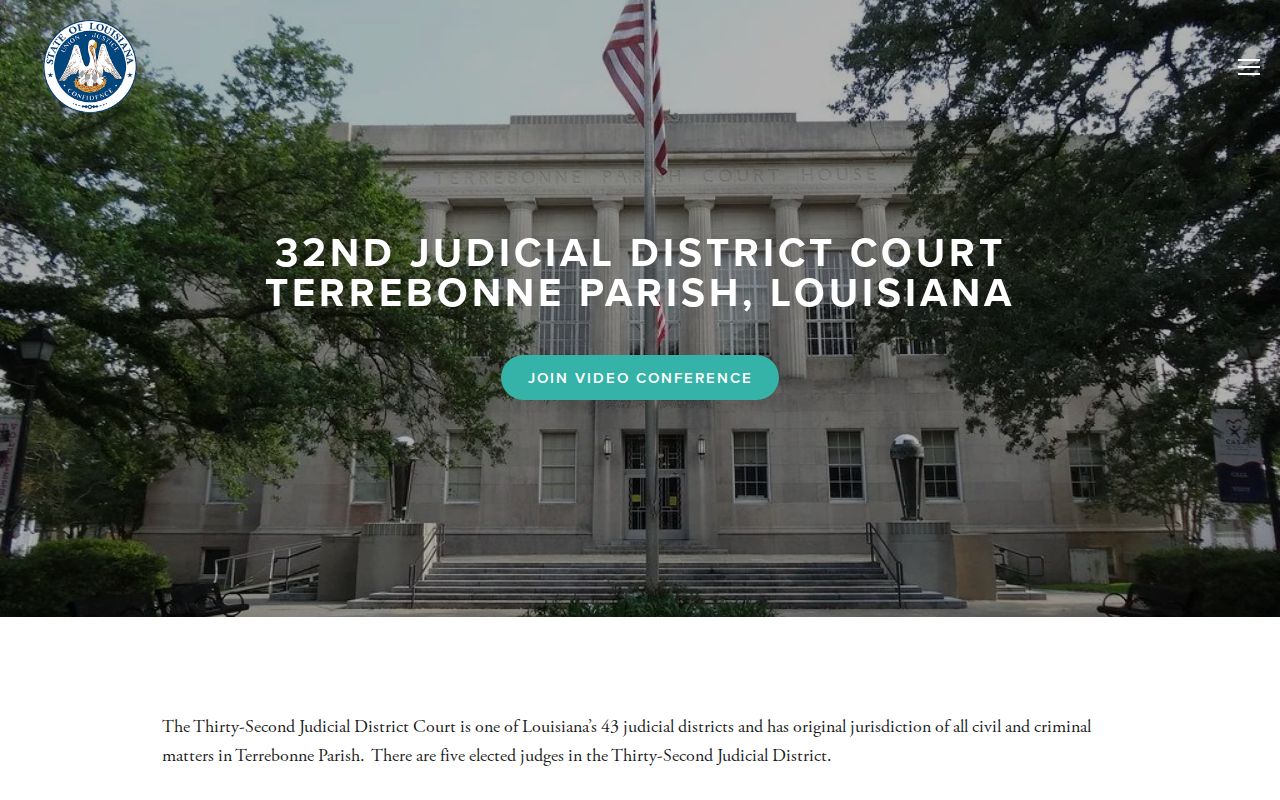
The five-division structure is a practical search clue. A division shown on a record helps route a date question to the proper judicial office in Terrebonne Parish.
Inside a Terrebonne Parish Court Docket
Terrebonne records use related terms. Docket, civil docket, criminal docket, court calendar, minutes, and minute entry all appear. The docket is the running index of what was filed, set, heard, or decided. It does not replace the full filed document. A minute entry is the clerk's condensed record. It covers what happened in a civil, criminal, or juvenile proceeding.
Read the header before the event list. It anchors the case to its number, court, division, judge, filing date, and parties. Then work through the entries in date order. A setting is usually a scheduled event, not a result. A judgment or disposition is a court outcome. A notice of appeal tells you something else too. The trial record is heading toward a separate appellate docket.
| Case number | The court-assigned identifier, used with the division to avoid a mistaken match. |
|---|---|
| Caption and parties | The civil party roles or the State and accused shown in the case style. |
| Division and judge | The 32nd JDC division that controls the case schedule. |
| Minute or filing entry | A dated record of a pleading, court action, or condensed proceeding result. |
| Setting | The listed hearing, motion, pretrial, trial, or status date that must be confirmed. |
| Disposition | The indexed outcome, which may require a minute or certified copy for formal proof. |
Terrebonne Parish Cott eSearch
Cott eSearch is the Terrebonne Parish clerk's subscription portal. It covers civil and criminal docket and index access. You sign in with a User ID and a case-sensitive password. Opening a new account means accepting the portal terms. Some setups ask for a signed agreement first. The product table splits docket-only access from packages that include certain images. So an entry on screen does not promise that the document itself will open.
One caution from the service itself: details can stay incomplete or unverified until they are recorded, indexed, verified, and released. Before searching, the clerk's Certified Dates utility tells you what each category covers. Civil indexing reaches back to July 1, 1990; criminal indexing starts September 6, 1994. Anything older than those dates belongs with Records or Archives rather than a dead-end docket search.
| Visible control | Use | Access note |
|---|---|---|
| User ID and Password | Account sign-in | Required credentials; password is case-sensitive. |
| Create an Account | Begin subscription access | Terms and payment conditions apply. |
| Certified Dates | Check index coverage | A coverage utility, not a case docket. |
| New Search | Start an authenticated search | Protected case fields appear after sign-in. |
Before you pay for a Terrebonne Parish Cott search, open the Certified Dates page. It lists which record categories and years the online index actually covers. It won't tell you whether a specific case exists, but it will stop you from paying to search a stretch of court records that was never indexed online.
Terrebonne Parish Docket Technology
Local technology shapes what a Terrebonne Parish court docket search can reach. In 2018 the Clerk of Court created an Archives Department. Its job was to back-scan records, manage retention, and move originals into on-site storage while keeping them viewable by computer or in paper form. That project explains a common split. A paper-era case may sit at the clerk's office even though the online civil or criminal index starts later. The Certified Dates tool shows category coverage. But it is no promise that every older file follows the same online path.
The Cott system itself changed over time. On January 22, 2014, it switched from a Java image viewer to HTML5. Its browser guidance asks for current Chrome, Edge, or Firefox. It also asks for enabled cookies and JavaScript, disabled pop-up blockers, and Adobe Reader for printing. Those settings decide whether a subscriber can actually open or print a court record image. They never change the underlying rule. The official record stays with the clerk.
Filing and docket reading are separate doors. Clerk Connect handles civil e-filing. Cott eSearch is the clerk's subscription route into the civil and criminal indexes and dockets. The parish has published no first local e-filing adoption year, so no rollout date can be assumed. Weather closures give one more reason to reconfirm a hearing or filing setting after an interruption. The official 2025 closure material is one example.
Courts That Keep Dockets in Terrebonne Parish
Dockets in Terrebonne Parish sit with separate courts, not one shared system. The 32nd JDC clerk keeps the district-court records. Houma City Court has its own docket. Ward-level matters stay with the justice courts. Appeals go up to the Louisiana First Circuit Court of Appeal, which keeps its record apart from the parish register.
| Court | Docket covers | Where to search or ask |
|---|---|---|
| 32nd JDC | District civil, criminal, family, juvenile, succession, and related matters | Terrebonne Clerk Cott eSearch, Records departments, or the assigned division |
| Houma City Court | City traffic, misdemeanor, parking, ordinance, juvenile, and local civil matters | Houma City Court counter, calendar route, or citation payment channel |
| Ward justice courts | Ward-based limited civil and eviction work where authorized | The responsible ward justice office |
| First Circuit | State appeals from the 32nd JDC | Its own appellate court record |
Terrebonne Parish Docket Counts
District 32 in Terrebonne Parish logged 20,051 filings in the Louisiana Supreme Court's 2024 activity table. Traffic led the pack at 12,474. Criminal filings came in at 4,095, civil at 3,091, and juvenile at 391. That mix matters when you pick where to search. The biggest category on paper may not be the office holding your record; city and ward courts keep their own dockets.
Numbers describe activity, not a guarantee that one online product lists every Terrebonne Parish filing or citation. The court where the case was filed still keeps the official record.
How to Find Court Dates and Settings
A docket date gets you started. But the 32nd JDC division assigned to the case sets the real time and place. Under the court's process, the clerk presents the file and the judge fixes the setting. Civil Records also prints the civil court calendar. For a Houma City Court docket, call that court. The district clerk will not confirm a city date.
Always read the newest minute before you act. A later reset can leave an older setting sitting in the history. Per the court's FAQ, a cancellation letter goes to chambers. The Minute Clerk takes calls about it. A reset with no opposition and notice waived may move differently than a contested one. Without those conditions, a formal motion may be needed.
The court's official scheduling FAQ covers Zoom preparation and division-controlled settings too. For a fuller date-checking routine, see the Terrebonne Parish court dates page.
Terrebonne Parish Setting Confirmation
All five district divisions have separate judicial-assistant lines. That matters after a weather closure, a Zoom glitch, a cancellation, or a reset. What a listing shows online may be stale. The assigned office holds the current instruction. Before you call, gather a few things. Have the case number, caption, division, and the date you saw in the register.
For remote hearings, the 32nd JDC tells participants to follow its video instructions. They should test their devices and internet, enter their full name, and wait to be admitted. Its FAQ says to try rejoining or refreshing first when the technology fails. Those directions apply to this court's hearings. They do not mean every Terrebonne case can be heard remotely.
Note: After a closure, reset, or remote-hearing notice, take one step. Confirm the most recent Terrebonne Parish court setting with the assigned court office before you appear.
Public Access to Court Dockets
Louisiana public-record law gives you the right to inspect and copy public court records. Juvenile, sealed, expunged, and confidential files sit outside that right. The paid eSearch tool is a convenience, nothing more. It cannot replace a trip to the clerk's office. A blank online result in a Terrebonne Parish docket search proves little. It neither overrides a court seal nor shows that nothing was filed.
Key rules:
La. R.S. 44:1 defines public records broadly, including electronic and database materials, subject to legal exceptions.
La. R.S. 44:31 gives an adult the right to inspect, copy, or reproduce a public record and places the exemption burden on the custodian.
La. R.S. 44:32 addresses the custodian's copy duty and reasonable procedures and fees.
Juvenile proceedings are generally confidential in Terrebonne Parish. Expunged criminal records are not ordinary public files either. Ask the responsible clerk which docket entry, authorization, order, or access route applies, because a search result only finds records. It is never a substitute for the official court file.
Terrebonne Parish Certified Records
A docket entry tells you that an event happened in the case. It does not verify the wording of an order or judgment. For that, you need a copy from the clerk. Plain civil and criminal copies generally run $1 per page. A certified copy adds a $5 charge plus $1 per page. The public-record search fee is $10. Minute rates can vary by department, so name the record type before you order.
Be specific about what you want. Ask for a minute entry, judgment, order, disposition, or the full case file. Include the case number, division, event date, caption, format, certification request, delivery method, and your contact information. The clerk accepts written requests by email or mail. Ask the office directly for an estimated completion date. Its published material lists no general processing time. The Terrebonne Parish Clerk of Court maintains the district-court record departments. It is the right source for those records.
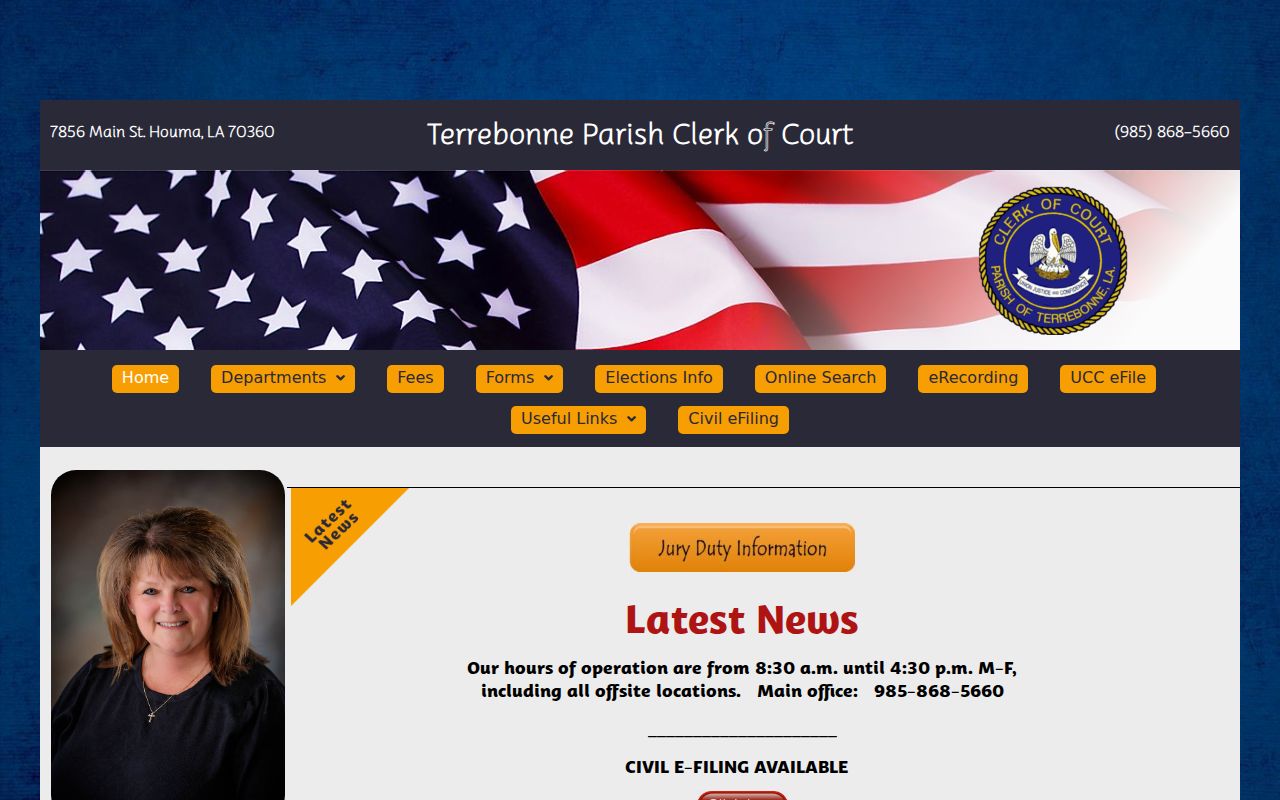
The clerk organizes records by department. That is why a certified civil copy, a criminal minute, and a question about a hearing setting can each travel a different internal route before you see the court docket result.
Docket Records at the Clerk's Office
The Terrebonne Parish Clerk of Court keeps the district court docket for the parish. Civil Records holds civil and probate files. It helps with viewing and copies, prints the civil calendar, and indexes civil suits. Criminal Records covers felony, misdemeanor, traffic, criminal non-support, and juvenile files. A separate Criminal Processing desk handles criminal minutes, calendaring, subpoenas, forfeitures, expungements, and criminal e-filing support.
At the counter you can inspect a docket. You can get a plain or certified copy, pull a minute entry, or request an archive retrieval. The office also takes a written Title 44 request by email or mail. Fax filing for civil matters works only under its own statutory conditions. It is not a general shortcut for copies. Criminal pleadings get no fax acceptance at all.
Terrebonne Parish Docket Archives
Older Terrebonne Parish court records take a different path. The Clerk's Archives Department opened in 2018. It back-scans originals, manages retention, and keeps records viewable on a computer or in their original form. Coverage can be uneven. The online coverage tool may show one date range for civil or criminal cases, while older wills, divorces, successions, and other categories follow different index dates in the Terrebonne Parish docket archive.
When your case falls outside the displayed online range, skip the repeat portal searches. Ask Civil or Criminal Records for help. Archives may pull the original or produce a scan instead. Give them a tight date range and the record type. That request gets you much further. It beats hammering a portal category with limited online coverage.
The clerk's Archives Department page explains the back-scanning work. It also covers the department's records-retention role for Terrebonne Parish court records.
Terrebonne Parish Court Dockets by City
Houma is the only incorporated city in the official parish profile. It stands alone in this directory of Terrebonne Parish court dockets by city. One thing trips people up here. Houma City Court is not a division of the 32nd JDC clerk. Its records never merge into that office's docket search. The city court keeps its own traffic, misdemeanor, parking, ordinance, juvenile, and local civil case records. Its citation payment tool handles payment or status activity only. So it does not replace a complete public case register for a Houma court docket lookup.
Houma Docket Search
33,406 residents in the 2020 Census incorporated-place table. City court traffic, misdemeanor, local civil, and related city records begin with Houma City Court.
Terrebonne Parish Federal Dockets
Federal cases never appear in the parish clerk's Cott index. No amount of searching that index will change this. Terrebonne Parish sits in the U.S. District Court for the Eastern District of Louisiana. That court runs on a separate system. Docket access there goes through PACER, and filings move through CM/ECF, the court's electronic filing system. A federal case with a familiar-sounding caption is still a different record system. It has a different clerk and its own numbered docket entries.
The Eastern District of Louisiana is the official federal court source for its local procedures.
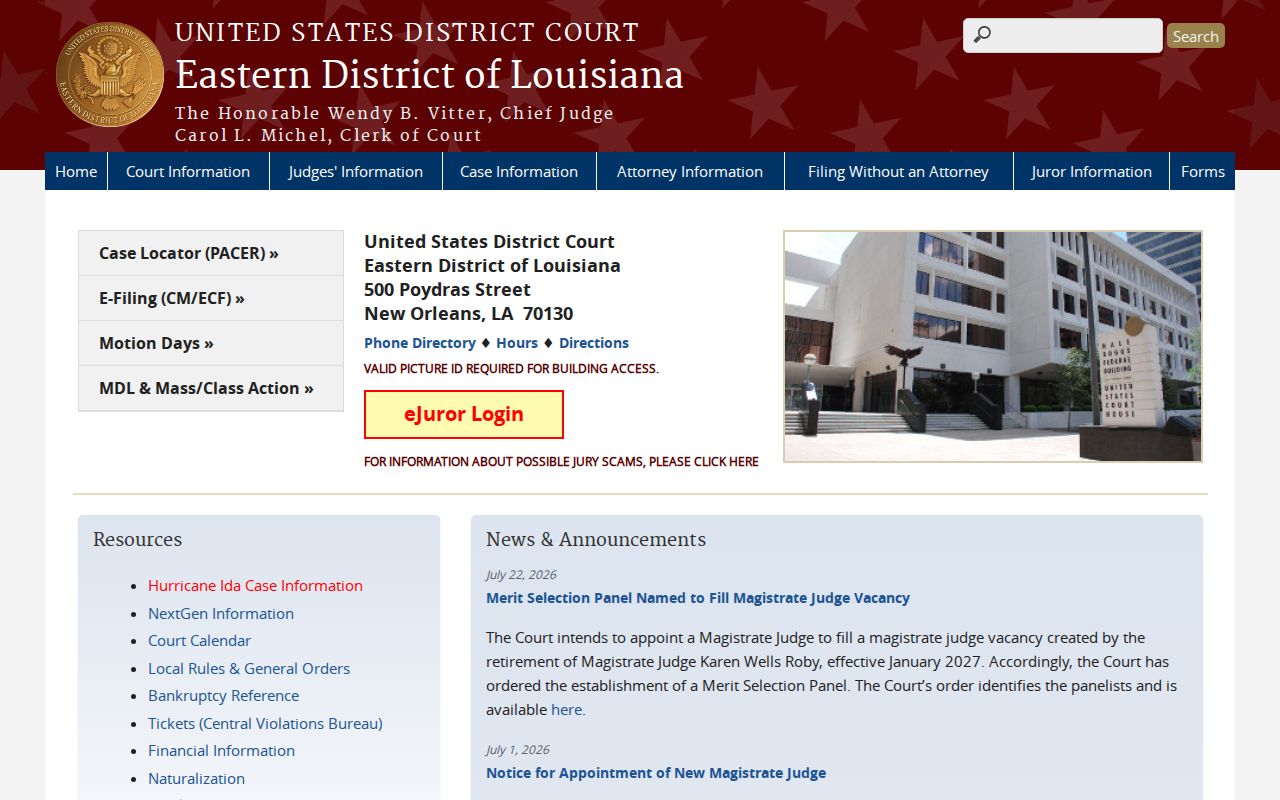
Go the federal route only because the case actually belongs in federal court, never because an ordinary Terrebonne Parish docket search came up empty. PACER is the federal public-access interface, run under current federal access rules.
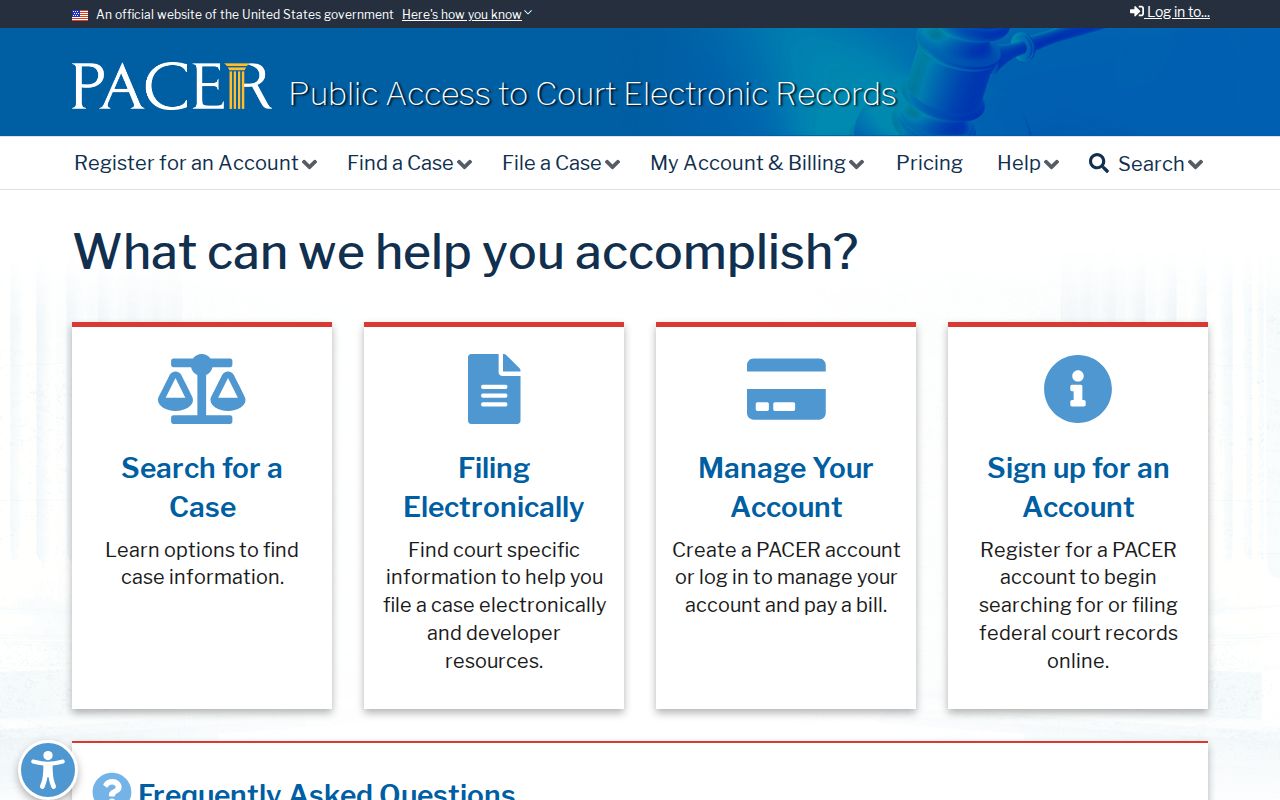
PACER's fees and case access have nothing to do with Terrebonne's subscription choices or the clerk's copy fees. When free federal docket material exists, CourtListener RECAP can supply it.
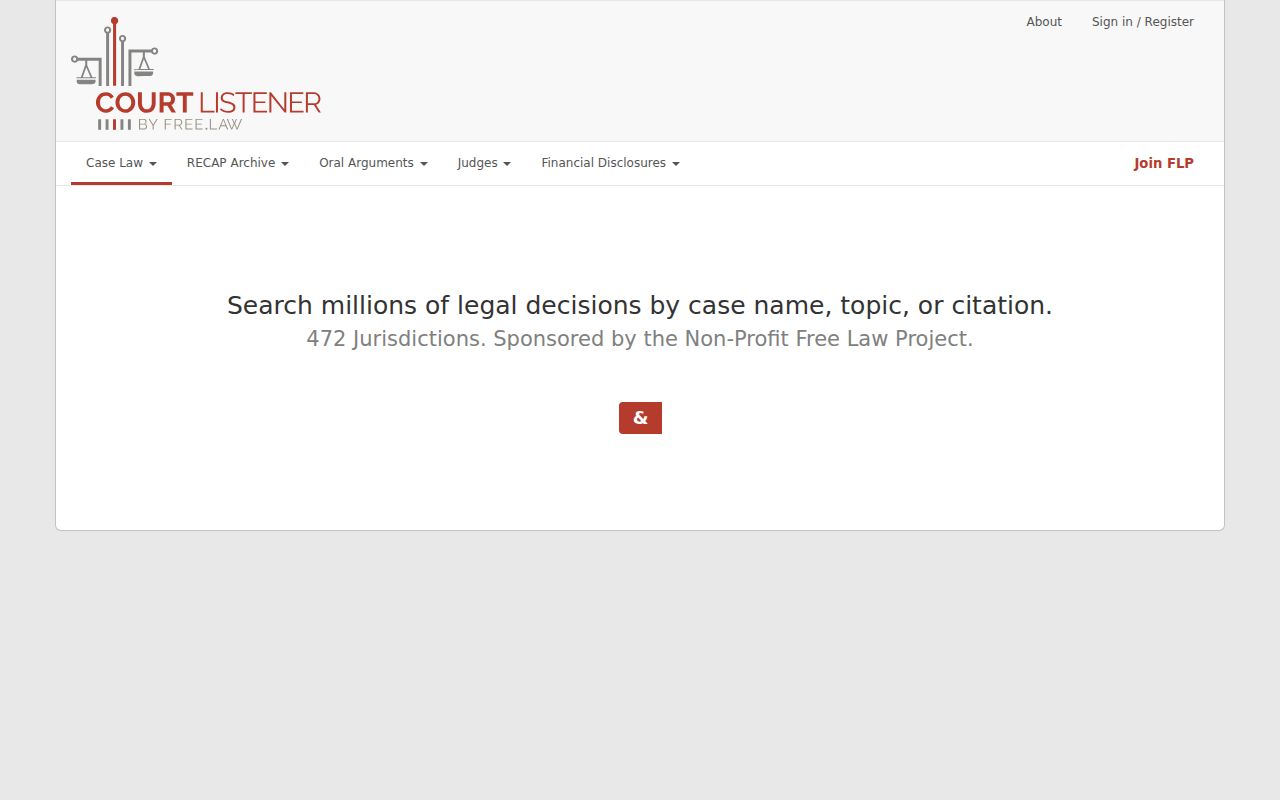
RECAP coverage is never guaranteed, so confirm any filing or current court event against the official federal docket itself. The court's own record is the one that counts.
Map and Directions to the Terrebonne Parish Courthouse
32nd Judicial District Court civil, criminal, family, probate, and succession files are kept at the Terrebonne Parish Courthouse, 7856 Main Street, in Houma. Civil Records and Criminal Records both sit on the first floor, while Criminal Processing, Civil Processing, Minute Clerks, Appeals, and Archives operate from the basement. The five district-court divisions, A through E, are in the Courthouse Annex in suites 200 through 236.
Terrebonne Parish Courthouse
7856 Main Street
Houma, LA 70360
985-868-5660
Monday through Friday, 8:30 a.m. to 4:30 p.m.
No official source publishes courthouse parking, security-screening, or public-terminal details, so bring the case number, court/division, and a precise document request, and confirm current access by phone before traveling. Weather and emergency closures, including a January 2025 freeze closure, have interrupted ordinary access before.